重温数据结构-查找
5 min
查找
线性查找
顺序查找
减少一半比较次数
查找成功时,平均比较次数为(n+1)/2
查找不成功时,平均比较次数为n+1
折半查找
int SearchBin(int a[],int n,int key)
{
    int low=1,high=n;
    while(low<=high)
    {
        int mid=(low+high)/2;
        if(a[mid]==key)
            return mid;
        else if(a[mid]<key)
            low=mid-1;
        else
            high=mid+1;
    }
    return 0;
}
折半查找的递归实现
int SearchBin(int a[],int low,int high,int key)
{
    if(low <= high)
    {
        int mid=(low+high)/2;
        if(a[mid]==key)
            return mid;
        else if(a[mid]<key)
            return SearchBin(a,mid+1,high,key);
        else
            return SearchBin(a,low,mid-1,key);
    }
    else
    return 0;
}
查找成功时
在 时,可得近似结果:
若查找不成功,则
索引查找
一般情况下,将长度为 的主表分成 块,每块含有 条记录,即 ,假设查找概率相等,则每块查找的概率为 ,块中每条记录查找的概率为 。 若索引表采用顺序查找,则
若索引采用折半查找,则
树表查找
二叉排序树查找
特点:每个节点的值大于其左子树的所有节点的值,小于其右子树的所有节点的值。
#include <iostream>
using namespace std;

template <class T>
class BiNode {
public:
    T data;
    BiNode<T> *lch;
    BiNode<T> *rch;
    BiNode() : lch(NULL), rch(NULL) {}
};

template <class T>
class BST {
public:
    BST(T r[], int n);
    ~BST() {}
    BiNode<T> *Search(BiNode<T> *R, T key);
    void InsertBST(BiNode<T> *&R, BiNode<T> *s);
    void Delete(BiNode<T> *&R);
    bool DeleteBST(BiNode<T> *&R, T key);

private:
    BiNode<T> *Root;
};
#include <iostream>
using namespace std;

template <class T>
class BiNode {
public:
    T data;
    BiNode<T> *lch;
    BiNode<T> *rch;
    BiNode() : lch(NULL), rch(NULL) {}
};

template <class T>
class BST {
public:
    BST(T r[], int n);
    ~BST() {}
    BiNode<T> *Search(BiNode<T> *R, T key);
    void InsertBST(BiNode<T> *&R, BiNode<T> *s);
    void Delete(BiNode<T> *&R);
    bool DeleteBST(BiNode<T> *&R, T key);

private:
    BiNode<T> *Root;
};

template <class T>
BiNode<T> *BST<T>::Search(BiNode<T> *R, T key) {
    if (R == NULL)
        return NULL;
    if (key == R->data)
        return R;
    else if (key < R->data)
        return Search(R->lch, key);
    else
        return Search(R->rch, key);
}

template <class T>
void BST<T>::InsertBST(BiNode<T> *&R, BiNode<T> *s) {
    if (R == NULL)
        R = s;
    else if (s->data < R->data)
        InsertBST(R->lch, s);
    else
        InsertBST(R->rch, s);
}

template <class T>
BST<T>::BST(T r[], int n) {
    Root = NULL;
    for (int i = 0; i < n; i++) {
        BiNode<T> *s = new BiNode<T>;
        s->data = r[i];
        s->lch = s->rch = NULL;
        InsertBST(Root, s);
    }
}

template <class T>
bool BST<T>::DeleteBST(BiNode<T> *&R, T key) {
    if (R == NULL)
        return false;
    else {
        if (key == R->data) {
            Delete(R);
            return true;
        } else if (key < R->data)
            return DeleteBST(R->lch, key);
        else
            return DeleteBST(R->rch, key);
    }
}

template <class T>
void BST<T>::Delete(BiNode<T> *&R) {
    BiNode<T> *q, *s;
    if (R->lch == NULL) {
        q = R;
        R = R->rch;
        delete q;
    } else if (R->rch == NULL) {
        q = R;
        R = R->lch;
        delete q;
    } else {
        q = R;
        s = R->lch;
        while (s->rch != NULL) {
            q = s;
            s = s->rch;
        }
        R->data = s->data;
        if (q != R)
            q->rch = s->lch;
        else
            R->lch = s->lch;
        delete s;
    }
}
template <class T>
BST<T>::~BST() {
    while (Root != NULL)
        Delete(Root);
}
最好情况:
最坏情况:
平衡二叉树查找
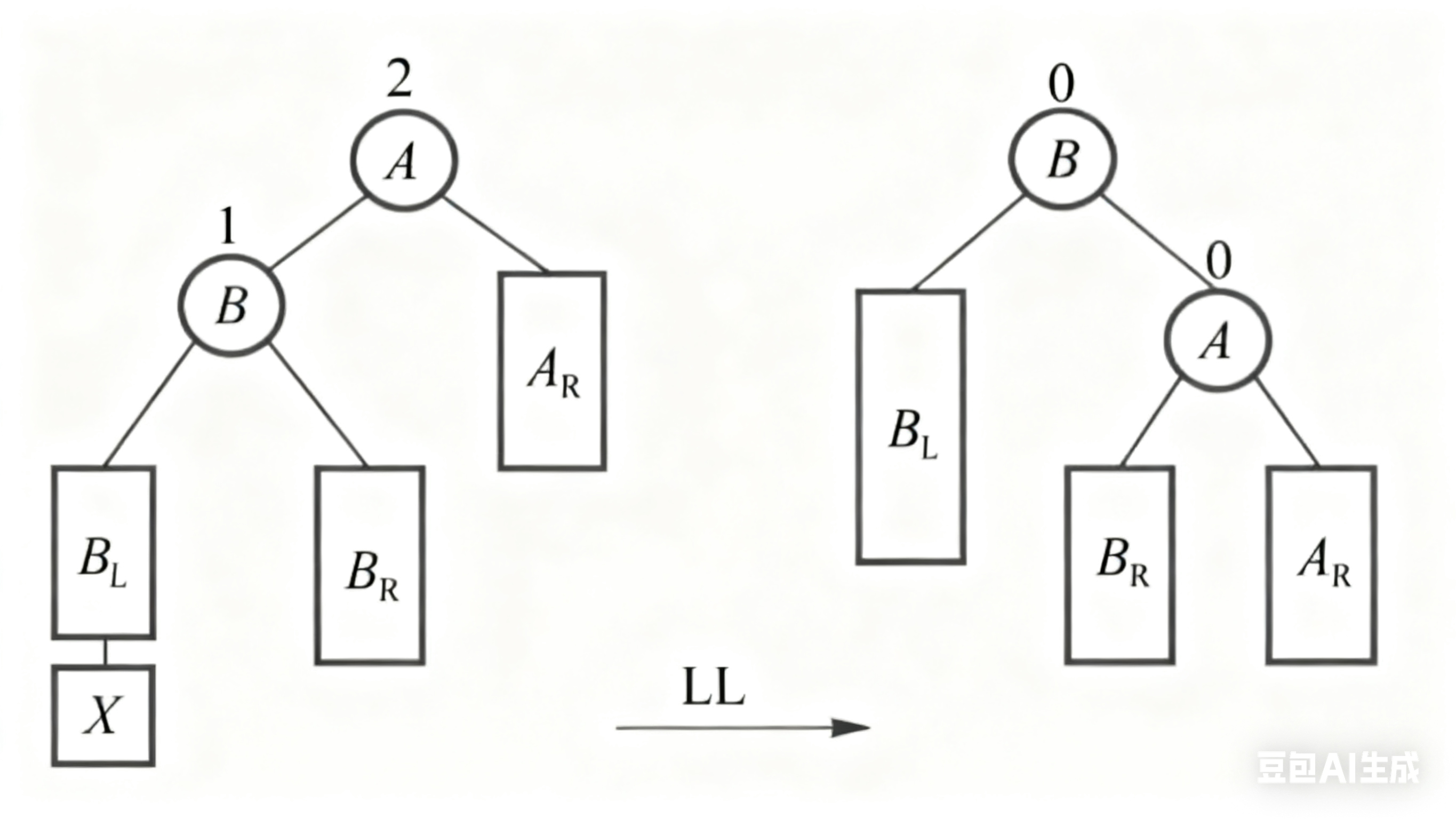
特点:任一节点的左、右子树的高度差不超过1,即平衡因子(左子树高度 - 右子树高度)的绝对值不超过1。 (1) LL 型 由于在结点 A 的左孩子的左子树上插入结点,使结点 A 的平衡因子由 1 增至 2 而失去平衡,需进行一次顺时针旋转操作
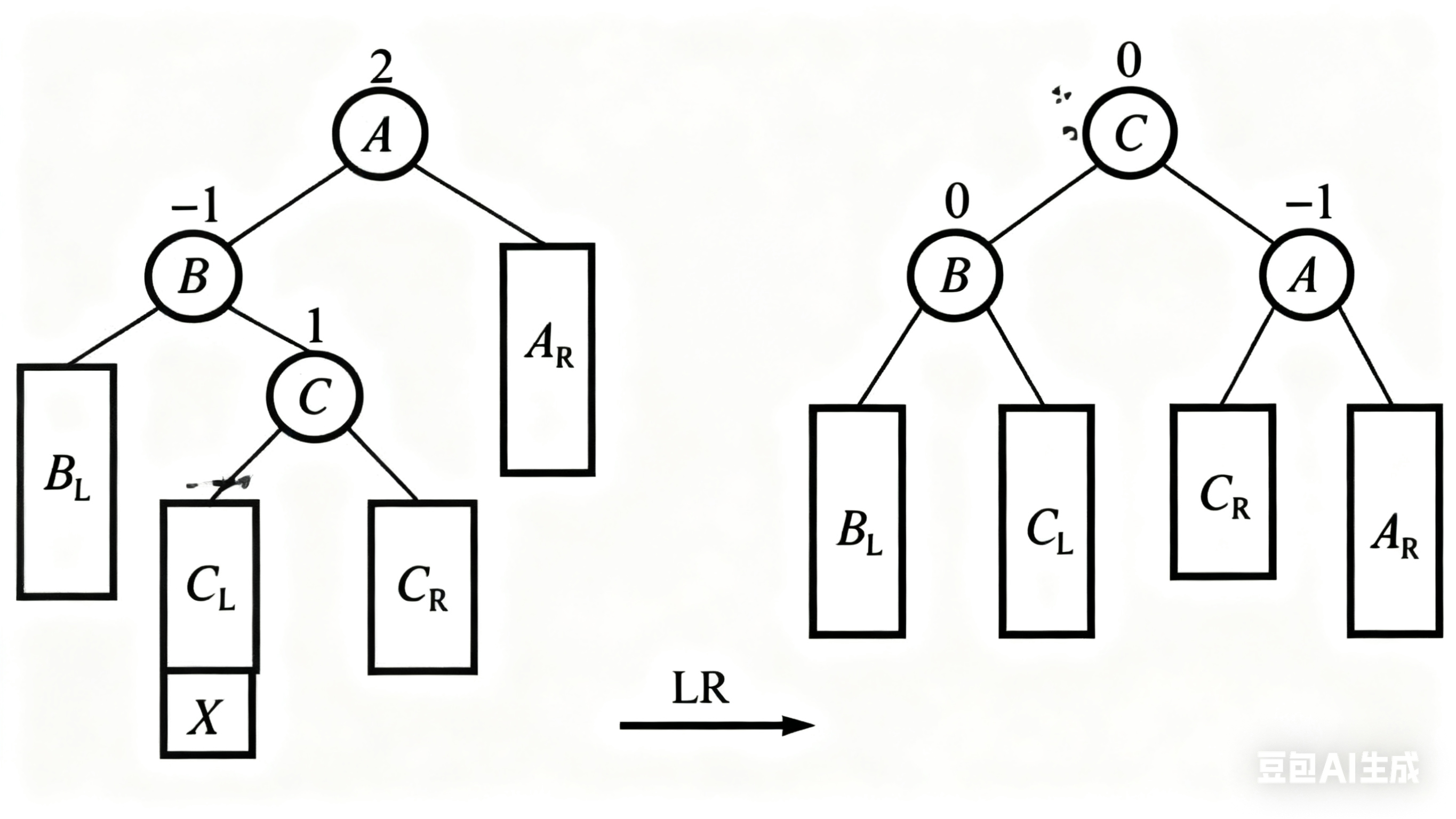
(2) RR 型 由于在结点 A 的右孩子的右子树上插入结点,使结点 A 的平衡因子由 减至 而失去平衡,需进行一次逆时针旋转操作,如图 6-17(b)所示。 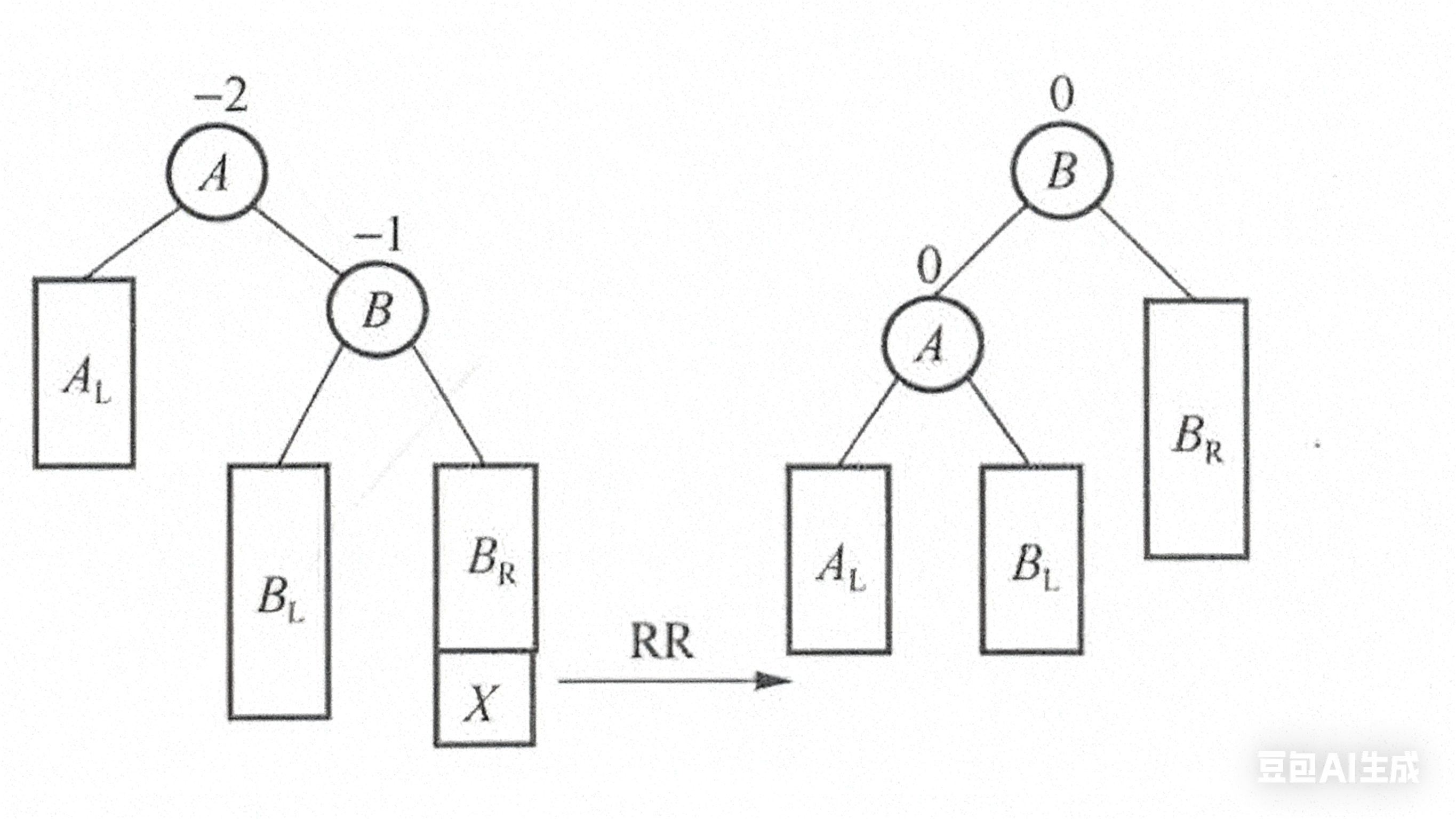 (3) LR 型 由于在结点 A 的左孩子的右子树上插入结点,使结点 A 的平衡因子由 1 增至 2 而失去平衡,需进行两次旋转操作(先逆时针,后顺时针),如图 6-17(c)所示。
  (4) RL 型 由于在结点 A 的右孩子的左子树上插入结点,使结点 A 的平衡因子由 减至 而失去平衡,需进行两次旋转操作(先顺时针,后逆时针),如图 6-17(d)所示。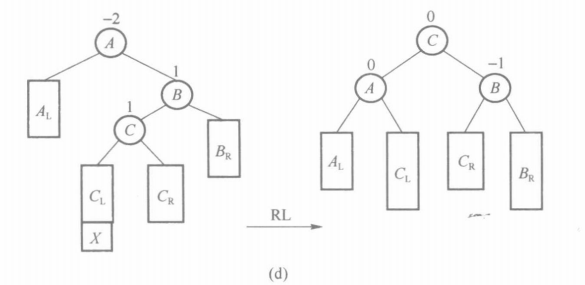
B-树